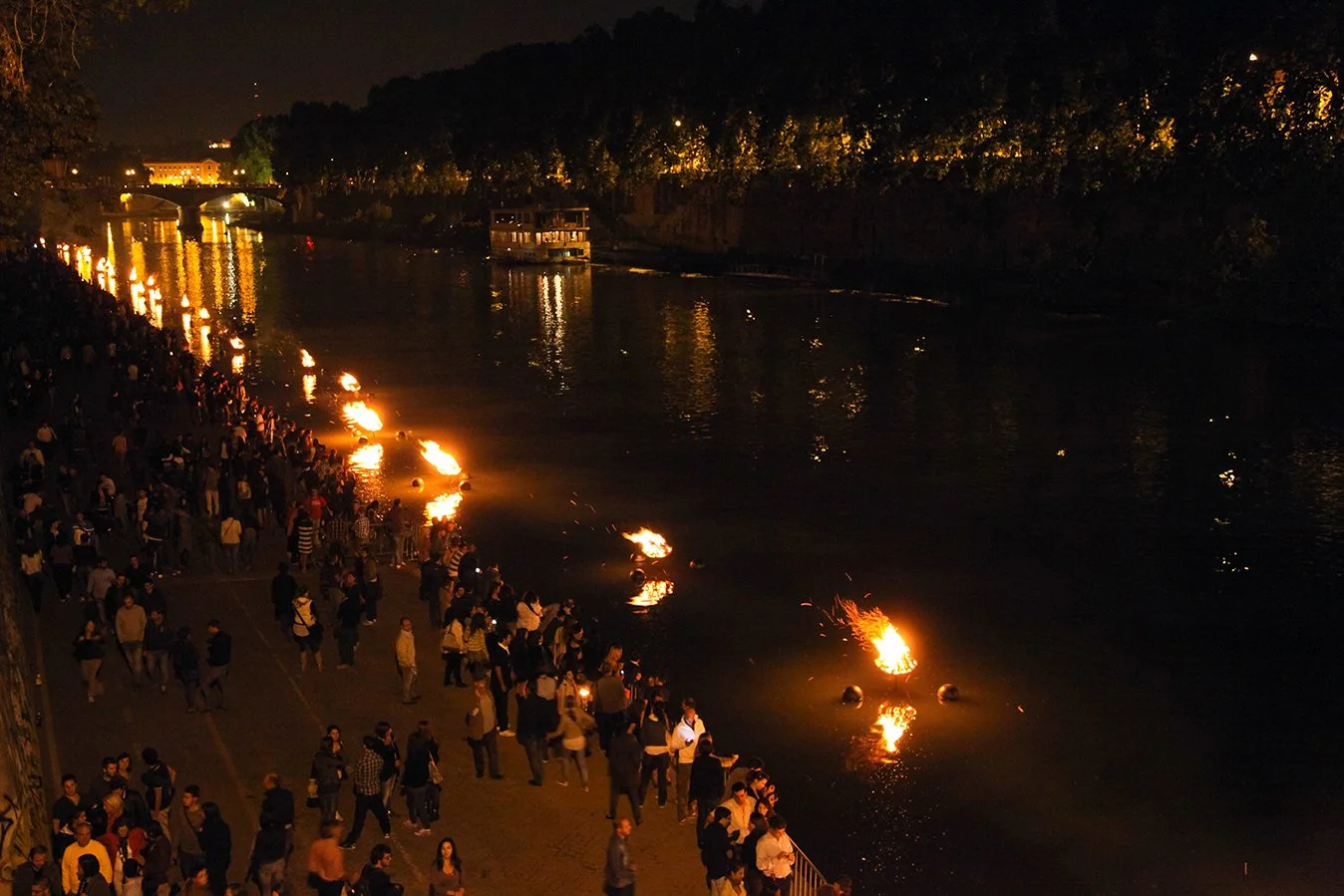
WaterFire Roma
Project: WaterFire Roma
Anatomy of the Event:
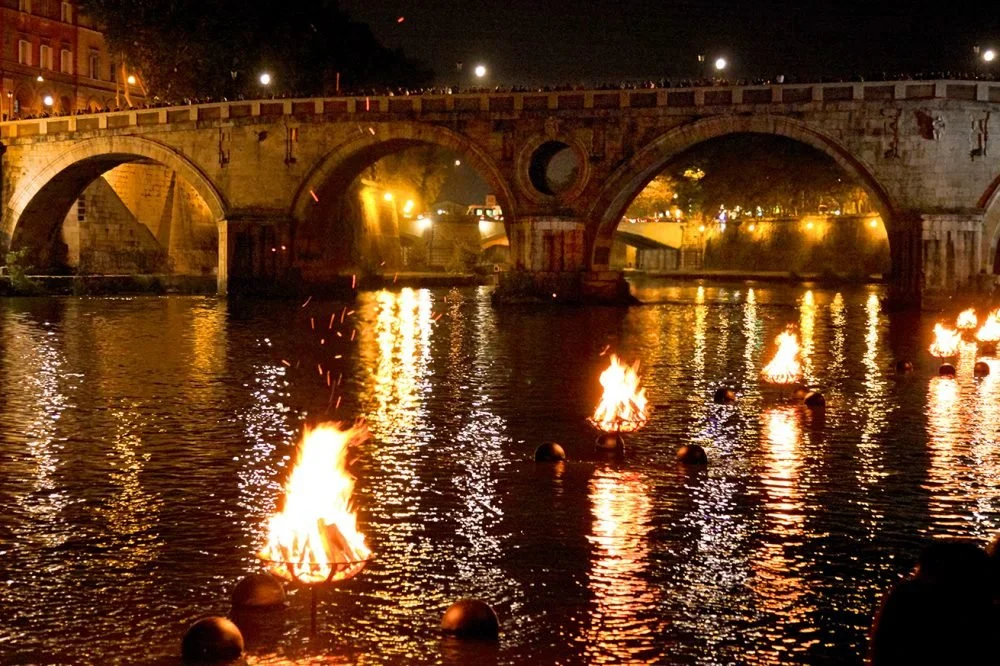
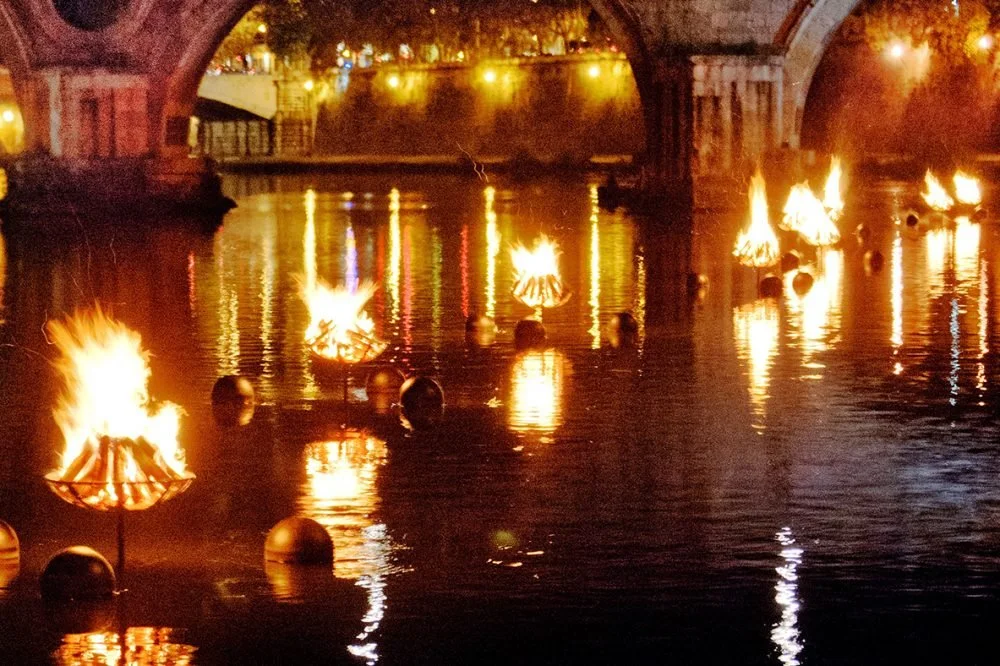
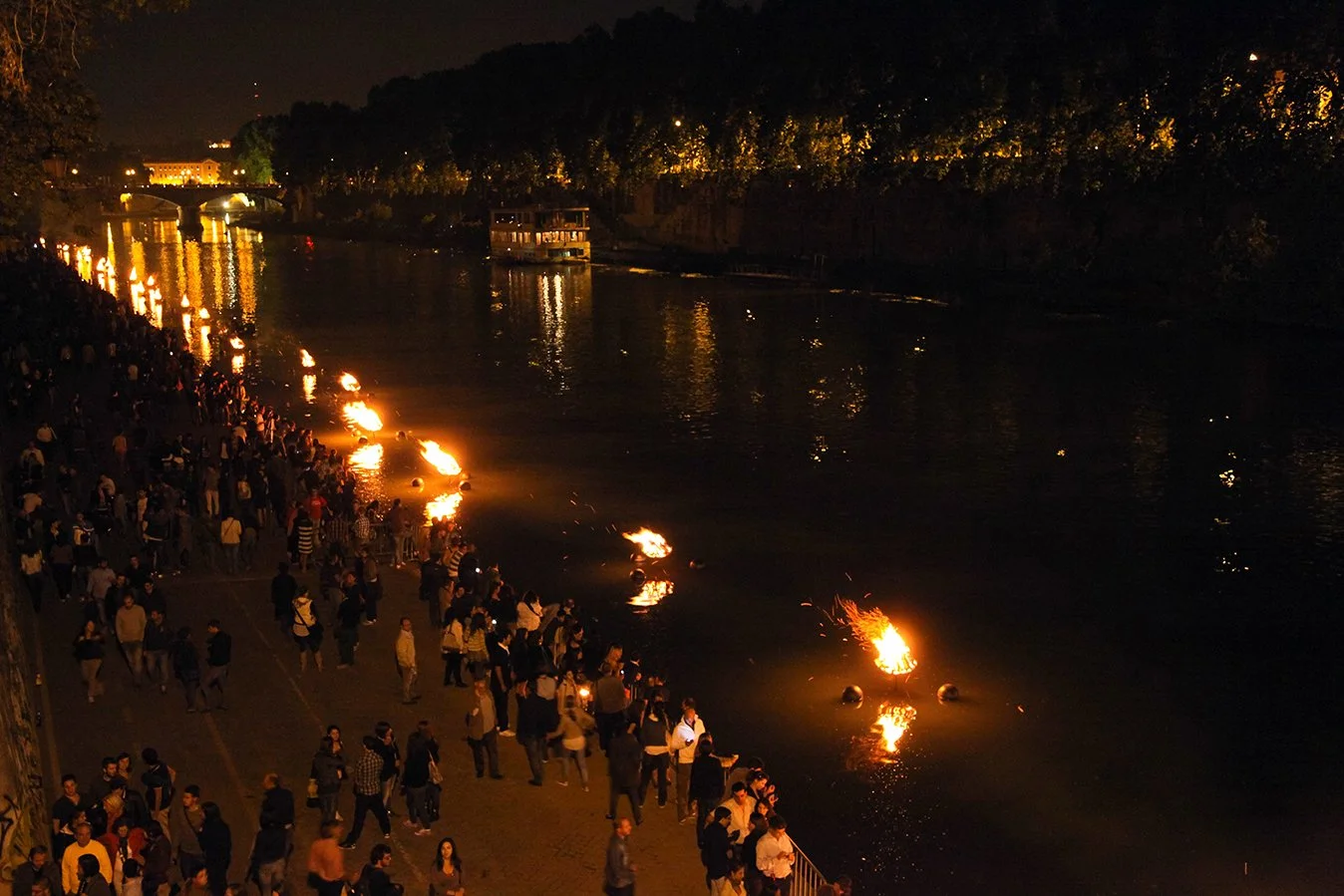
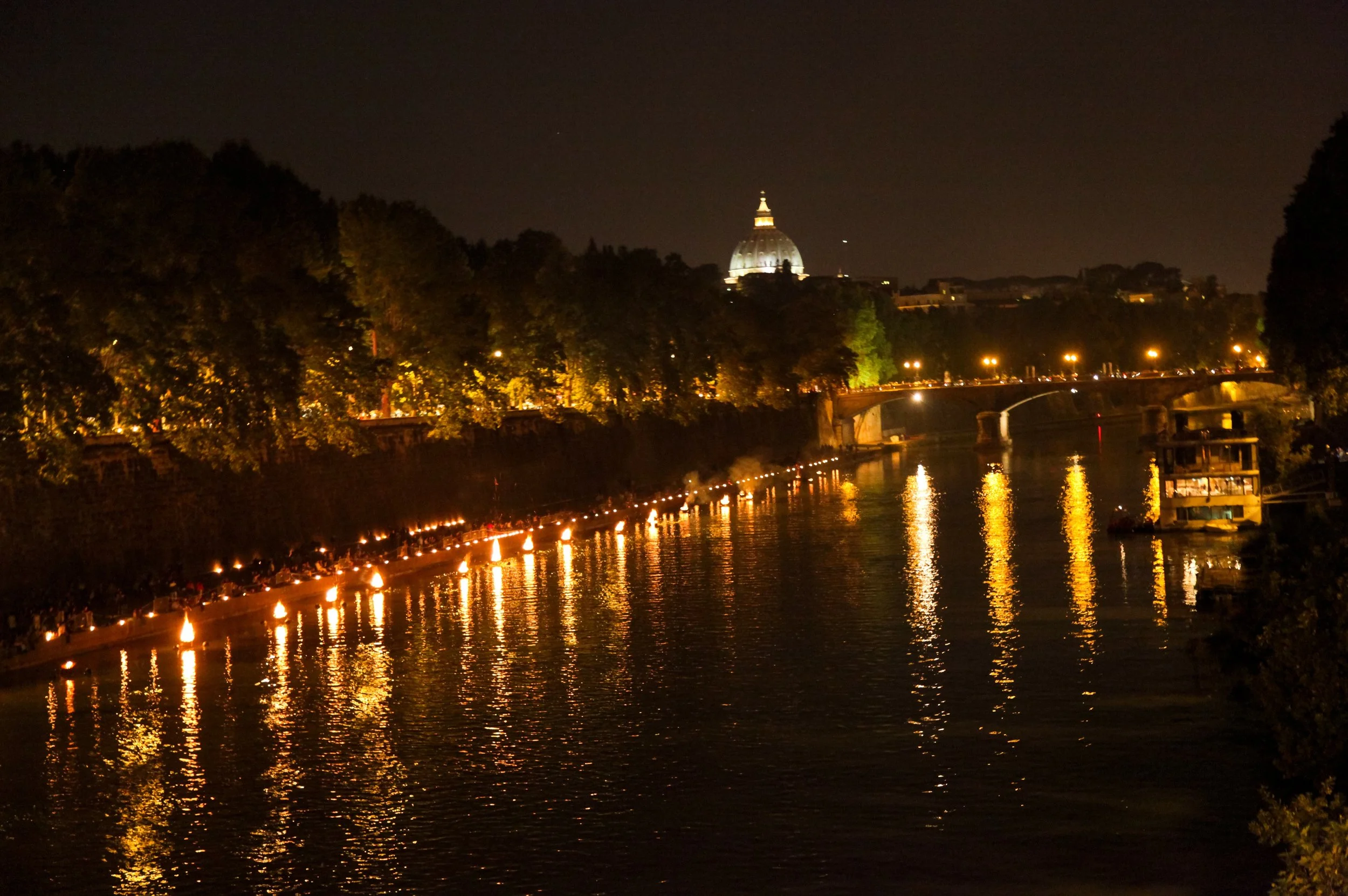
Scale & Scope: A large-scale urban regeneration and placemaking installation featuring 30 custom-fabricated floating bonfires drifting along the Tiber River in Rome, Italy.
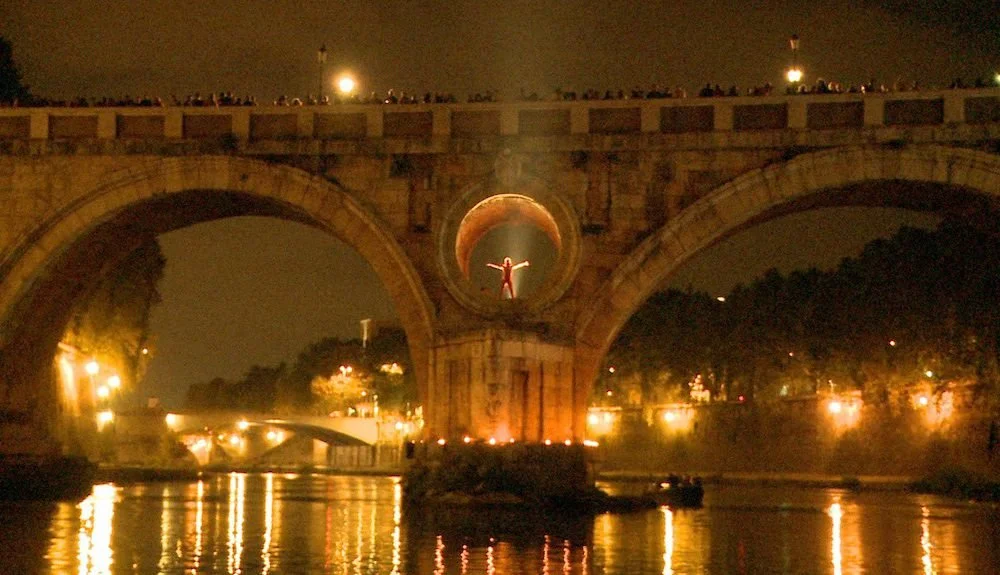
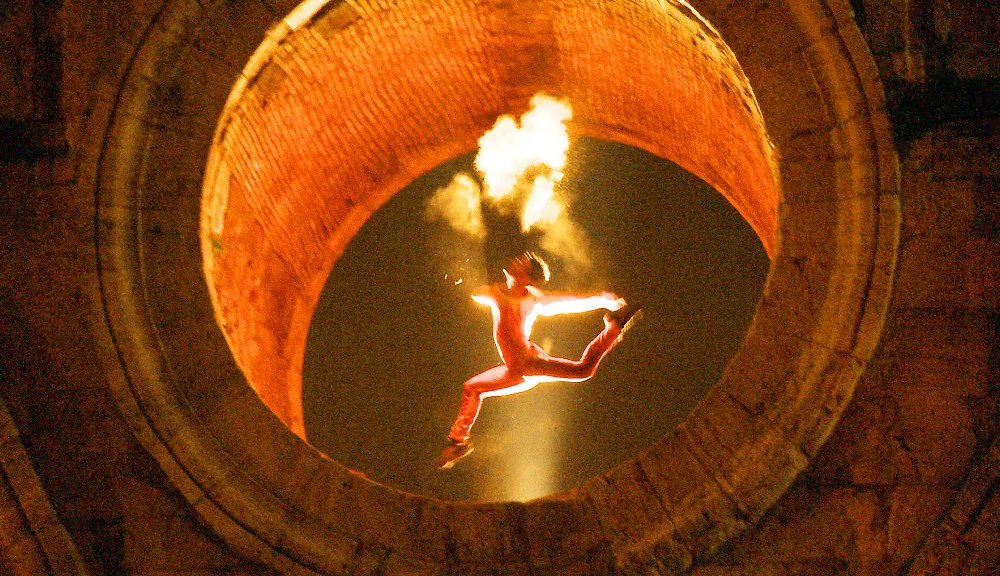
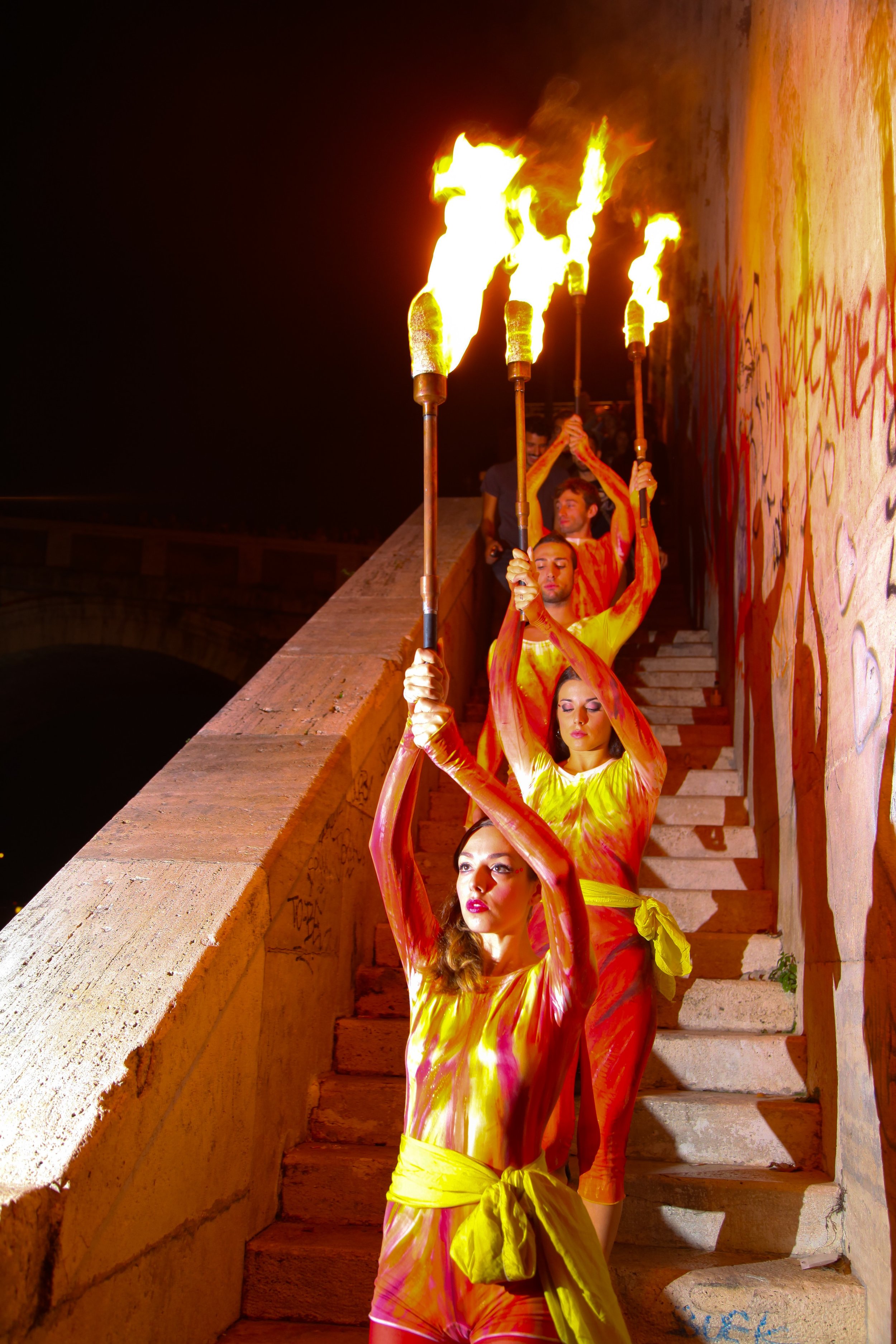
Artistic Disciplines: A multidisciplinary fusion of environmental theater, site-specific performances, synchronized musical scores, an interactive audience installation, and a contemporary ritual.
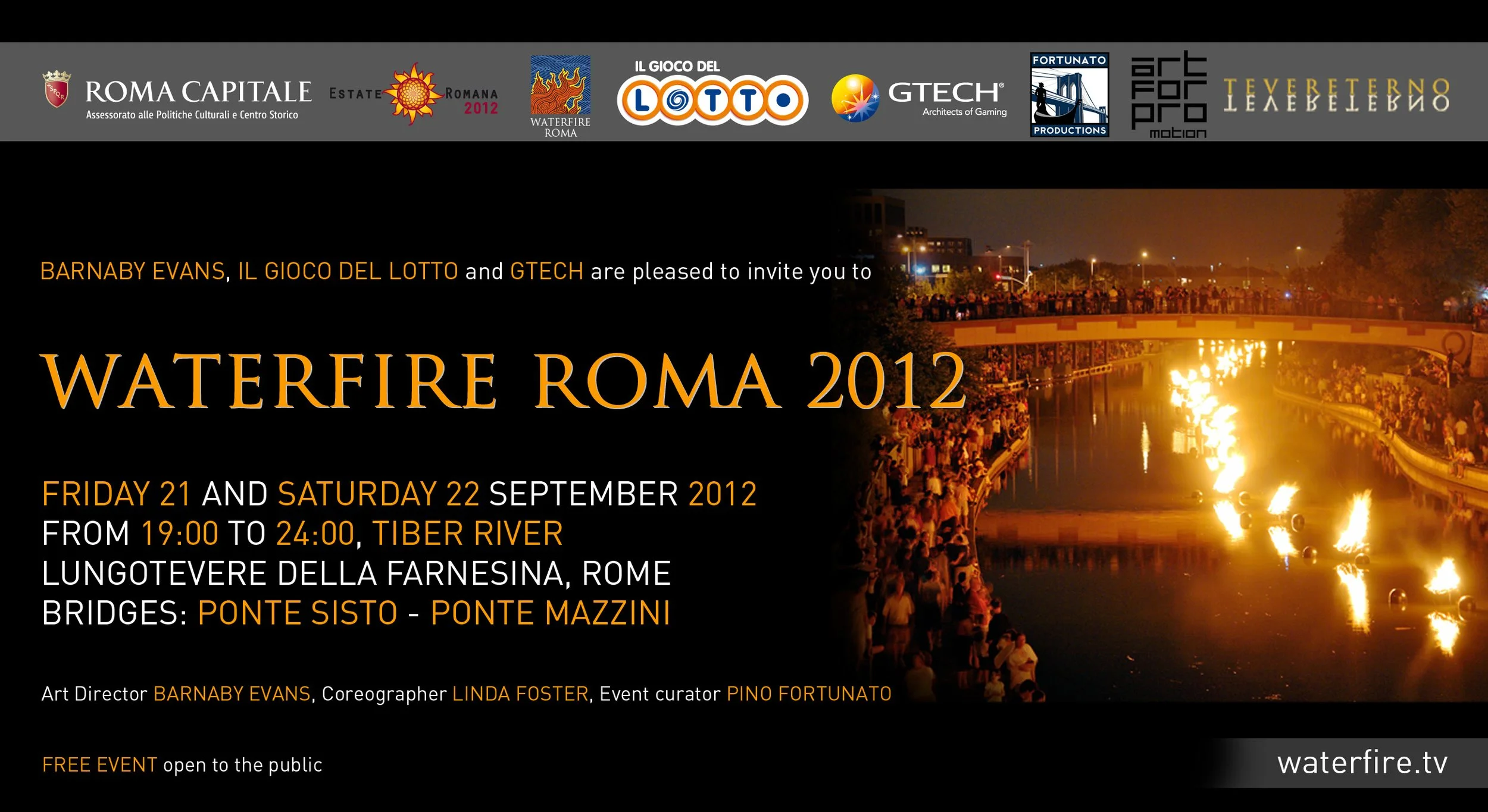
Programming: A signature two-night event running from sunset to midnight, highlight of the Estate Romana 2012 (City of Rome Annual Cultural Summer Program).
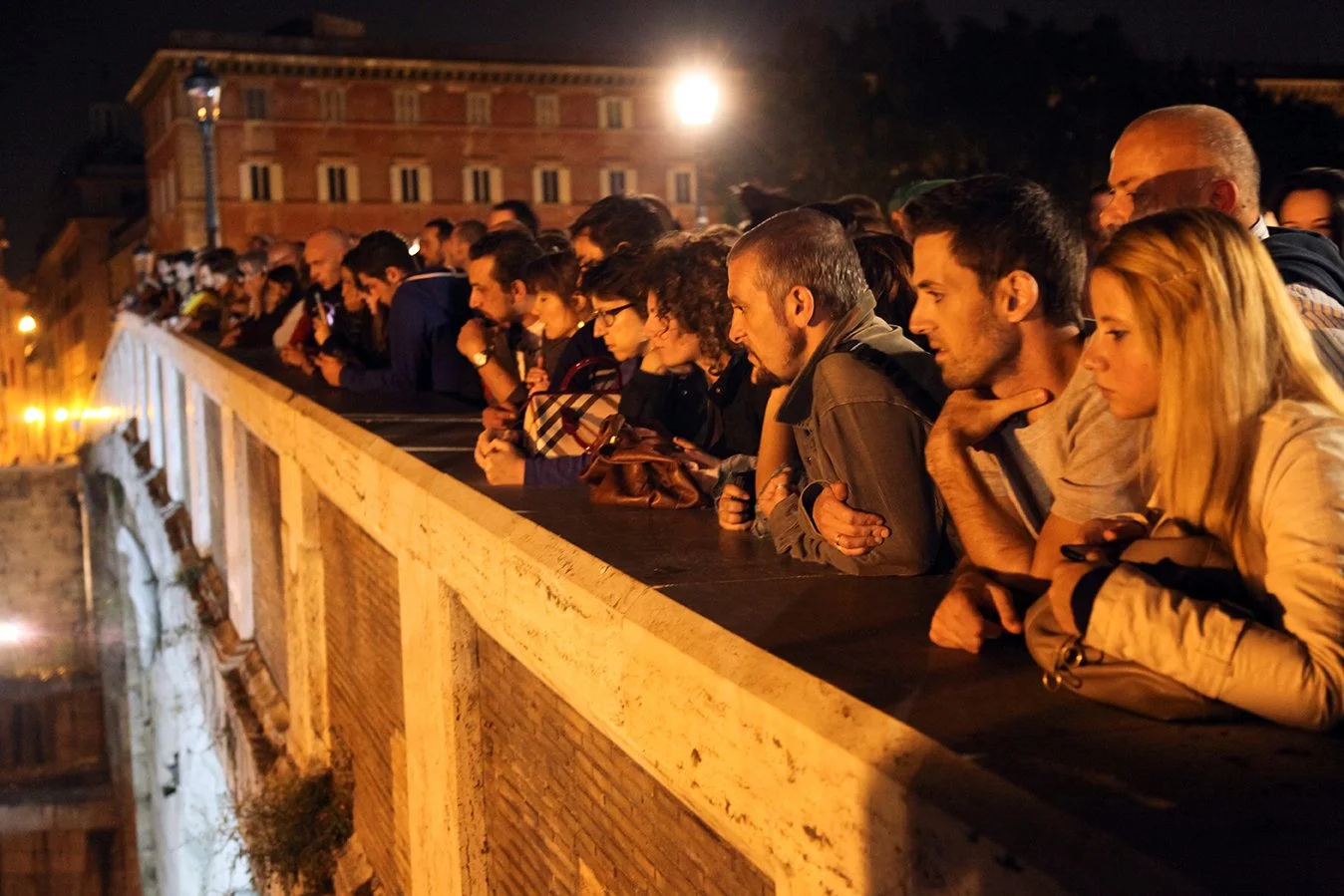
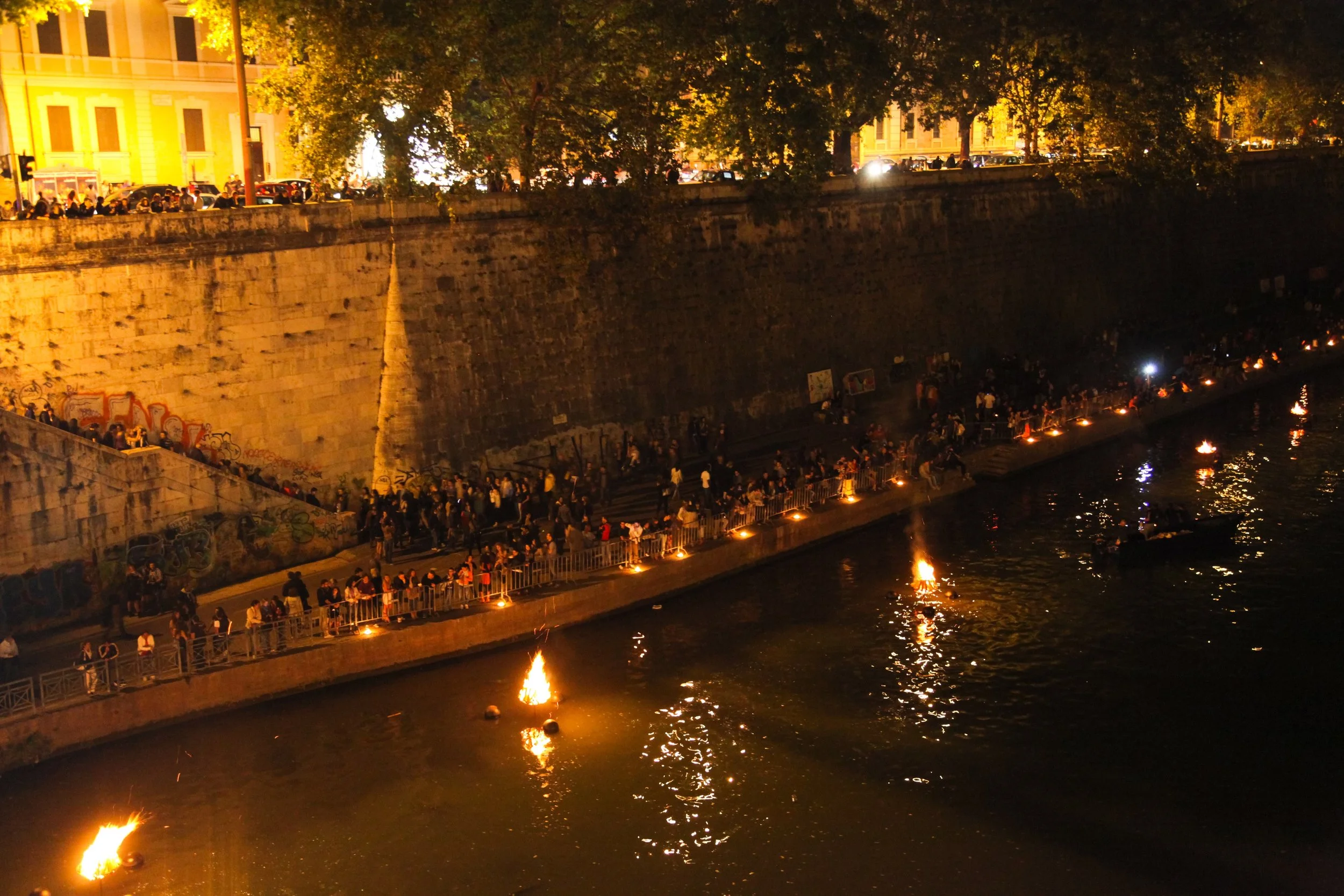
Community Impact: Transformed the Roman public from passive observers into active participants, drawing over 10,000 spectators through deep community engagement.
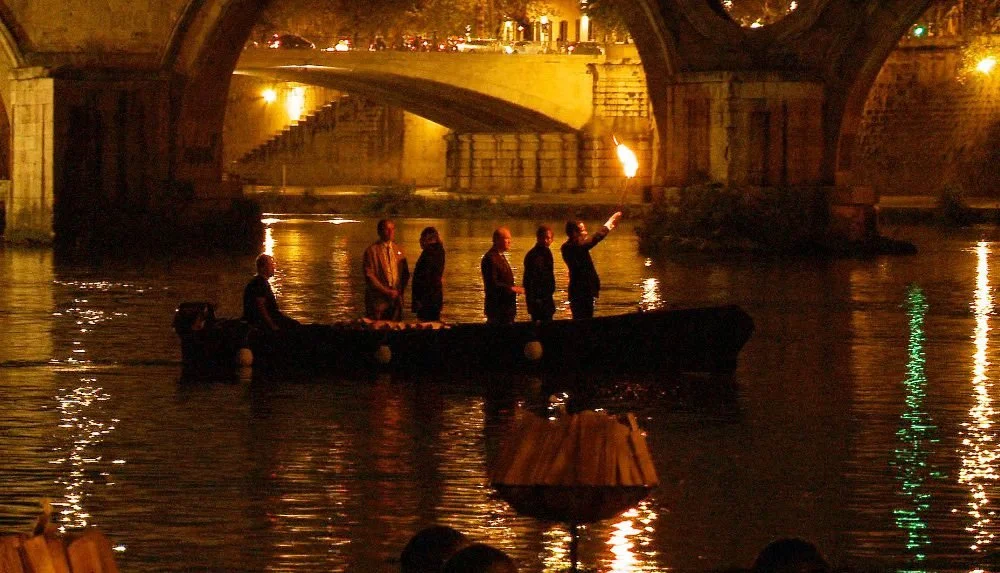
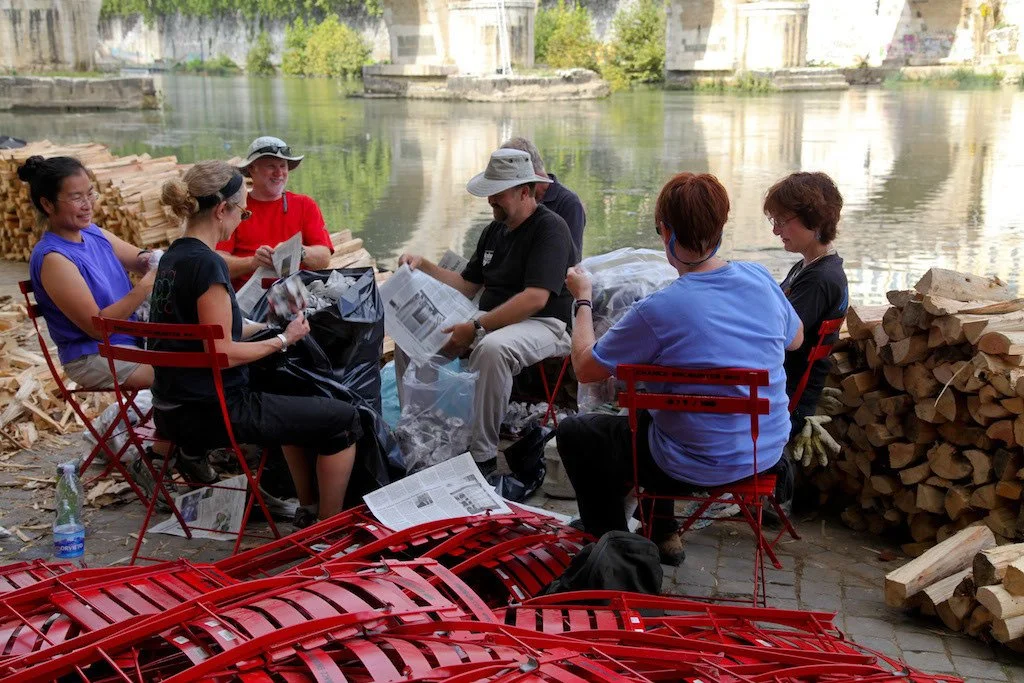
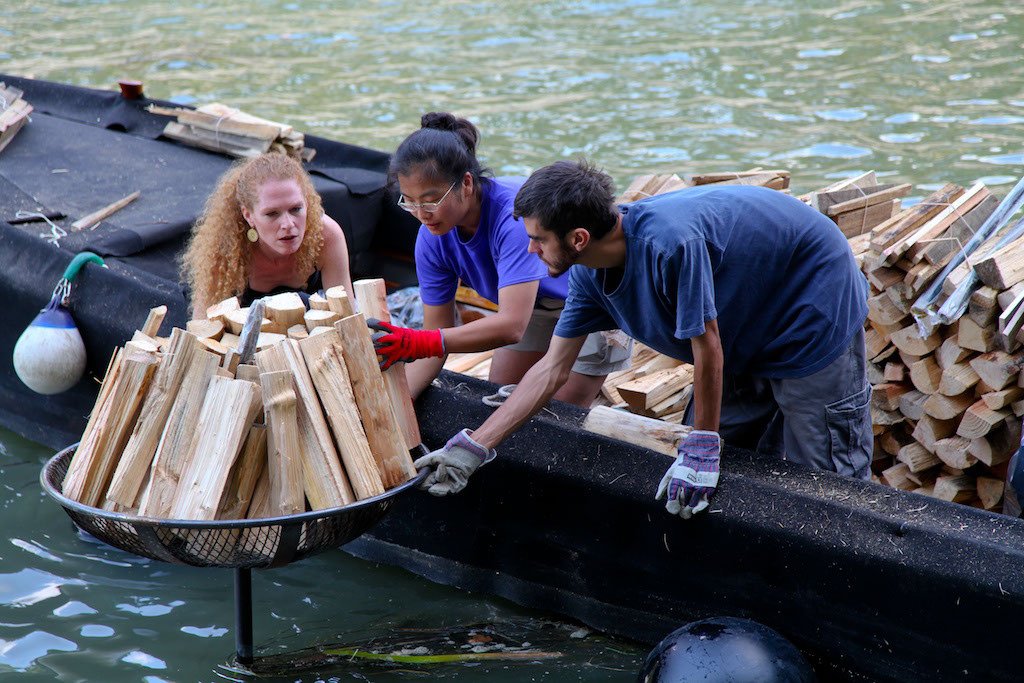
Performative Volunteerism: Mobilized a binational team to manage the installation of the braziers and operate gondolas to refill them; this rhythmic, all-night manual labor was choreographed as a living form of performance, turning essential logistics into an integral part of the artistic spectacle.
Reclaiming Abandoned Spaces: Successfully re-introduced the public to the neglected banks of the Tiber, proving that artistic intervention can revitalize even the most disused urban waterways.
About:
September 21-22, 2012
Conceived by American artist Barnaby Evans and first installed in Providence, Rhode Island, in 1994, WaterFire arrived in Rome for a historic first European edition at Piazza Tevere. More than a performance, this urban ceremony was driven by a clear urban regeneration intent: to transform the traditionally abandoned banks of the Tiber River into a vibrant, contemporary space.
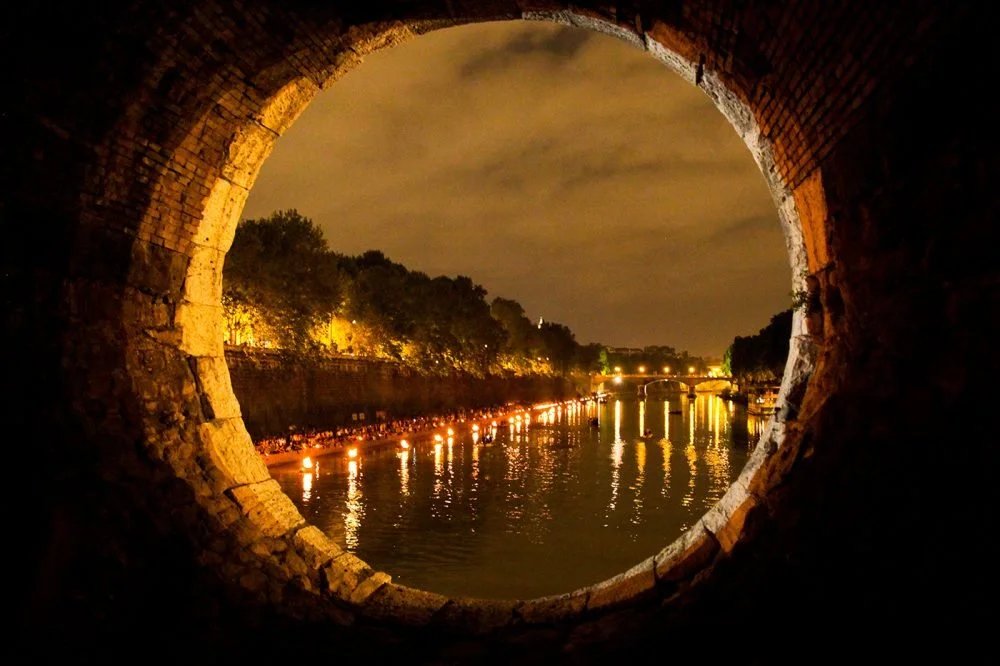
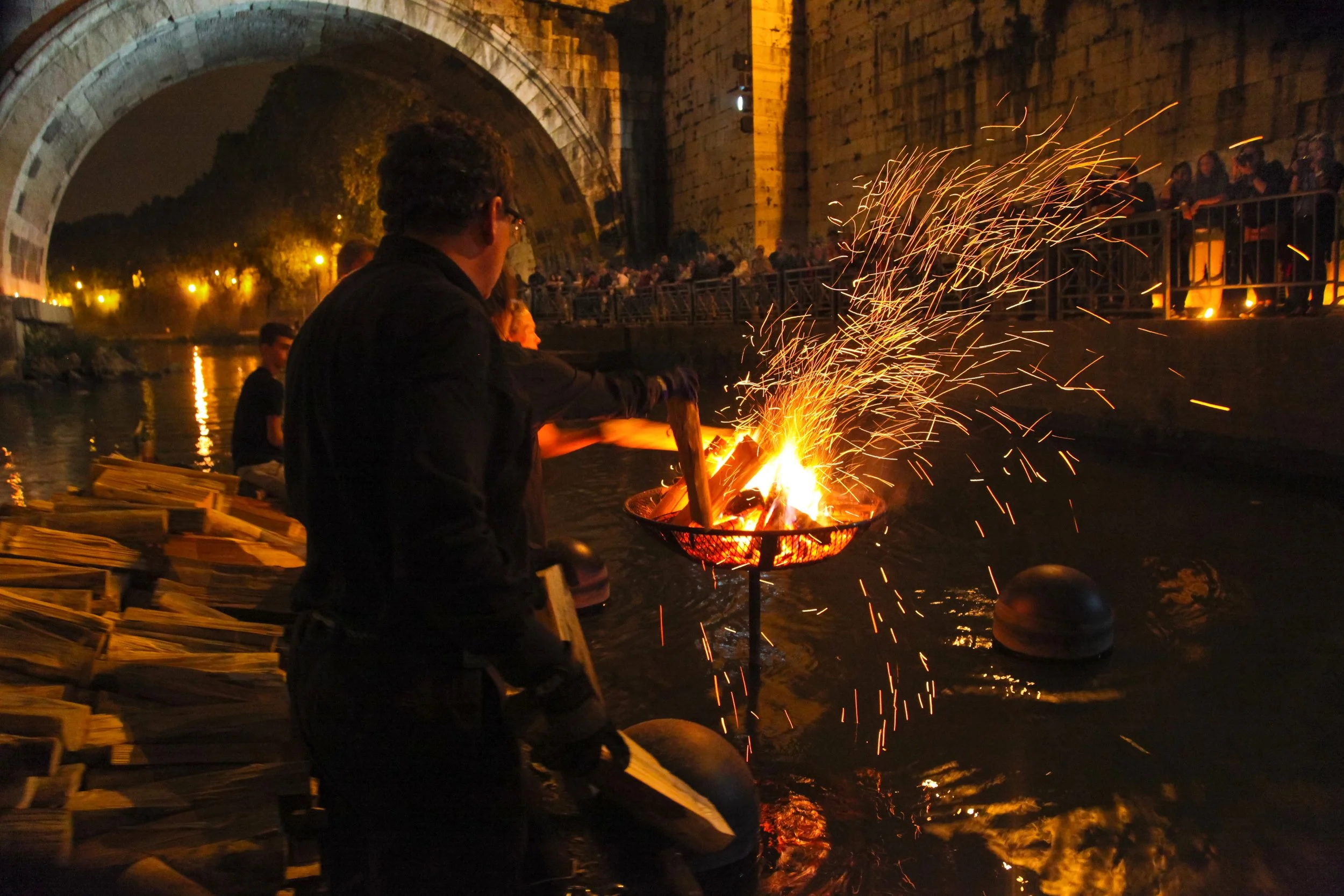
The installation featured 30 floating bonfires drifting from sunset to midnight—manually tended by volunteers on gondolas who refilled the braziers with wood throughout the night. This rhythmic, manual labor was choreographed as a living form of performance, turning essential logistics into an integral part of the artistic spectacle. Through this collective effort, the project successfully reclaimed the river's edge, turning a neglected corridor into a stage.
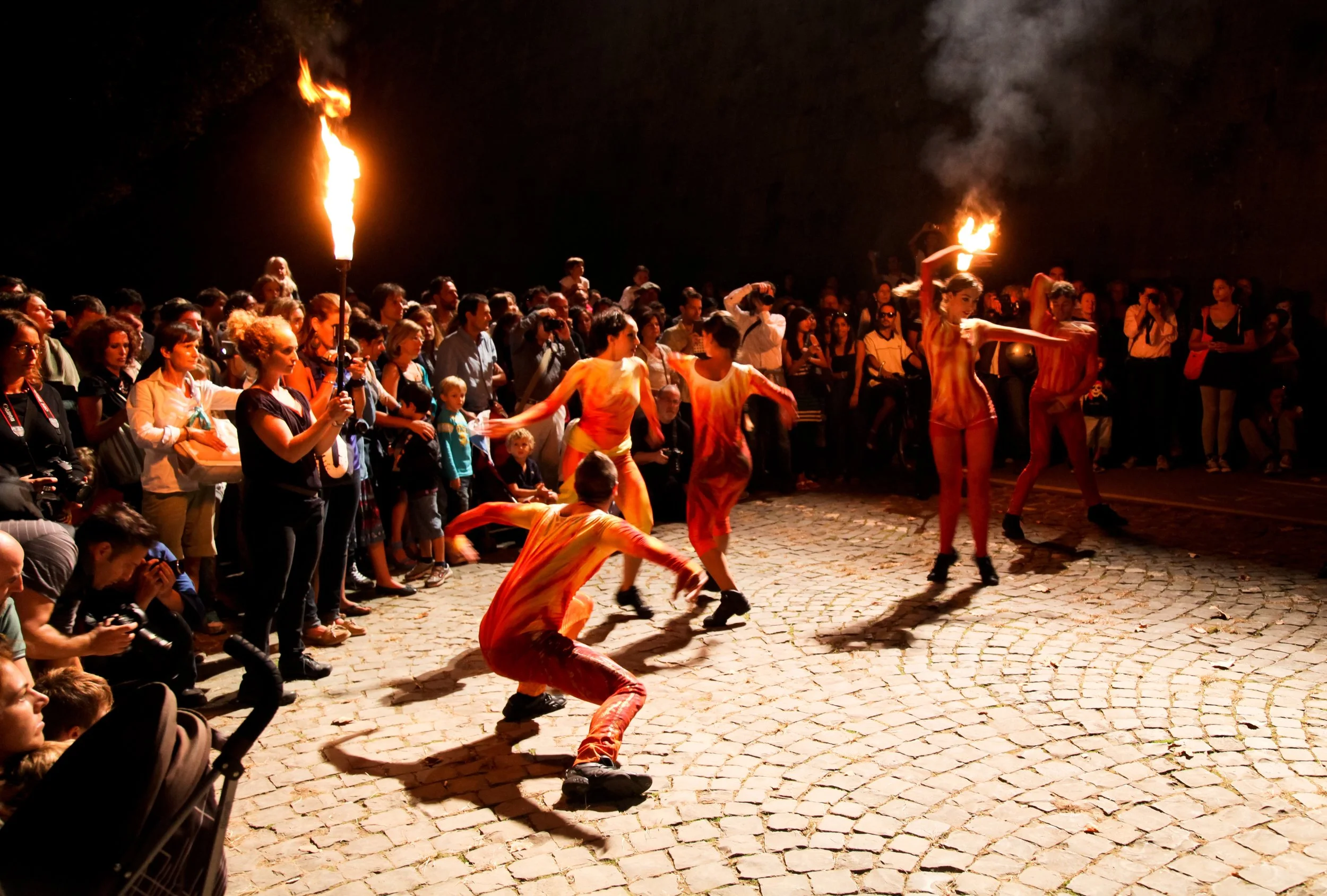
Organized by Pino Fortunato in partnership with Tevereterno Onlus, the initiative focused heavily on community activation, turning the Roman public from passive observers into active protagonists. The event utilized environmental theater—specifically Moveable Space by choreographer Linda Foster—and a revival of Robert Hammond’s Chance Encounter installation. By placing 100 red chairs along the waterfront, the project sparked a new physical engagement with a site often overlooked in daily Roman life (see Projects: Chance Encounter on the Tiber).
At its core, WaterFire taps into the primordial human need for community through the symbolic elements of water and fire. The flickering flames reflected on the water created an enchanted atmosphere of peace and collective sharing, functioning as a "suggestive contemporary tribal ritual" that successfully drew over ten thousand spectators to the riverbanks.
While WaterFire remains a seasonal staple in the United States, its Roman debut stands as a landmark moment in international placemaking. It proved that through bold artistic intervention, abandoned urban waterways can be revitalized as the beating heart of community life and cultural identity.
Credits:
The ambitious two-night program was realized with the assistance of dozens of volunteers from both Rome and the United States, sponsored by GTECH, the Lottomatica Group, Il Gioco del Lotto, the De Agostini Group and the City of Rome.
Press: